Macajor Auto Macajor Auto

Will a Roof Box Affect My Car Gas Mileage?

Time:2026-11-24 Author:Isabella
0%

A roof box can make a family trip easier, especially when luggage no longer fits behind the back seat. But that extra storage sits in the airflow, where it can increase drag and make the engine work harder. So, will a roof box affect my car gas mileage? In many cases, yes, though the size of the change depends on the vehicle, box shape, load, and driving conditions.

The effect is often more noticeable at highway speeds. Picture a car carrying a tall box through steady wind: the added resistance may matter more than it does on slower city streets. An empty box can still create drag, while extra weight may also affect fuel use. There is no single mileage figure that applies to every car. Small details count.

For a useful comparison, note your fuel economy over similar trips with and without the box. Keep the route, speed, tire pressure, and driving style as consistent as possible. Even then, weather and traffic can skew the results, so one trip may not tell the whole story. Remove the box when you do not need it, and check the vehicle and rack maker’s load limits before packing. These steps will not guarantee a specific saving. They can help you judge whether the convenience is worth the fuel trade-off for your own car. My own estimates would still be estimates, not a promise for every driver.
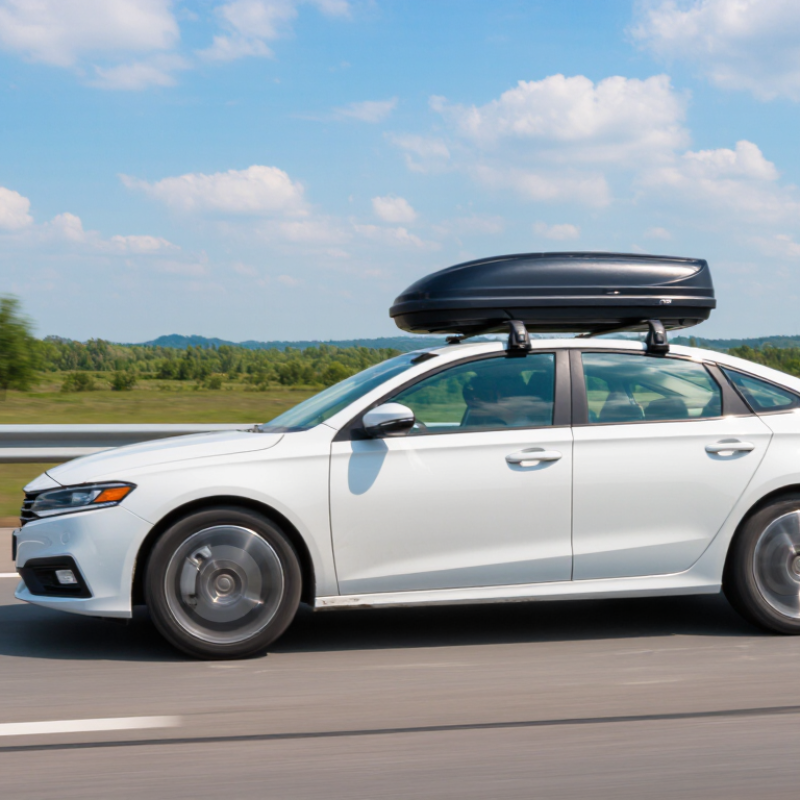
Will a Roof Box Affect My Car Gas Mileage?

How a Roof Box Changes a Car’s Aerodynamics

A roof box changes airflow before it changes your fuel gauge. Air strikes the box’s blunt front edge, then separates around its sides and rear. This creates a turbulent wake and adds aerodynamic drag. The effect is strongest at highway speeds, where the car must spend more energy pushing through the air. Small detail, big effect.

Consumer Reports’ 2013 road test found that a rooftop cargo box reduced fuel economy by about 19% at 65 mph on the test sedan. That result is not a universal prediction: box shape, vehicle design, wind, and driving speed all matter. Still, it shows how a box sitting above the roofline can carry a noticeable fuel penalty. A low, streamlined box may disturb airflow less than a tall, wide one, but its fit and placement also matter.

You can often hear the change before measuring it: a soft rush or whistle near the roof as air breaks around the box. Keep heavy items inside the car when practical, and remove the empty box when it is not needed. Even an empty shell adds frontal area. That matters. I would treat any exact mileage estimate cautiously; real roads rarely repeat a controlled test’s conditions.

Factors That Affect Fuel-Economy Changes

A roof box changes airflow before it adds much weight. At highway speeds, its height and front face increase aerodynamic drag, making the engine work harder to maintain speed. The U.S. Department of Energy’s fuel-economy guidance estimates that rooftop cargo boxes can reduce highway fuel economy by 6% to 17%. That range is broad. It cannot predict every car or trip.

The actual change depends on the box’s shape and position, your vehicle’s profile, speed, wind, and load. A tall box may disrupt airflow differently on a low sedan than on a taller vehicle. Faster driving magnifies aerodynamic drag, while stop-and-go traffic can make its effect less dominant. Even an empty box catches air. Treat the estimate as a starting point, not a precise forecast.

Tips: Compare fuel use on similar routes, at similar speeds, and in similar weather before and after fitting the box. Keep it centered and securely mounted, and remove it when unused. Drive steadily. Note wind and passenger load, too; they can muddy the comparison.

How Speed and Driving Conditions Influence Fuel Use

A roof box can raise fuel use, but speed often determines how noticeable the change feels.

At higher speeds, air resistance grows quickly, and the box disrupts airflow above the roof. The engine must work harder to hold speed, especially on long, open stretches.

It adds drag. A small change around town may become clearer on a highway. Results vary with vehicle shape, box size, load, and fit.

Crosswinds can make the car less steady and require small steering corrections. Wind matters, too. A headwind can further increase the effort needed to maintain speed.

Stop-and-go traffic changes the picture.

Frequent acceleration, steep hills, rough roads, and heavy cargo can all increase fuel use, with or without a roof box. Compare similar trips: same route, tire pressure, passenger count, and driving pace.

Check fuel economy over several fill-ups rather than relying on one dashboard reading. Keep speed moderate, remove the box when it is not needed, and pack only what you will use.

A careful installation helps, but it cannot erase the aerodynamic penalty.

Exact estimates can be frustratingly hard to pin down when traffic and weather keep changing.

How to Reduce Fuel Consumption with a Roof Box

Will a Roof Box Affect My Car Gas Mileage?

How to Reduce Fuel Consumption with a Roof Box

A roof box can increase fuel use because it adds weight and creates wind resistance. The effect depends on the box’s shape, your car, speed, and load. At highway speeds, extra air resistance can become more noticeable. There is no single mileage figure that applies to every vehicle.

Remove the box when you do not need it. Mount it securely and follow the vehicle and box instructions. Pack only what you need, placing heavier items inside the car when practical. Keep the load within the stated limits. I have sometimes packed “just in case” items that barely came out; that extra weight was hard to justify.

Tips: Drive at a steady, moderate speed and avoid sudden acceleration. Check tire pressure against your vehicle’s recommended levels before a long trip. Small changes help. Compare fuel use over similar routes and conditions, since wind, traffic, and temperature can skew a single trip’s results. If the box whistles or shifts, stop safely and check its fit.

When to Remove a Roof Box to Save Fuel

A roof box earns its place on the car when it carries skis, camping gear, or bulky luggage. Once the trip is over, remove it rather than letting it ride empty for weeks. An empty box still catches air.

The U.S. Department of Energy estimates that a loaded roof rack can reduce fuel economy by 2%–8% in city driving, 6%–17% on highways, and 10%–25% at interstate speeds. These are broad ranges, not a guaranteed figure for every vehicle or box.

The best time to take it off is when you no longer need the extra cargo space, especially before regular high-speed commuting. Aerodynamic drag rises with speed, so the box may matter more on a long motorway run than during short, slow errands. A small box on a streamlined car may have a different effect from a wide box on a taller vehicle. I would not treat one percentage as a promise.

Check your next few trips. If the box stays unused between weekend outings, remove it during the gap; also consider taking off unused crossbars. Keep the box securely stored, and refit it before loading gear. Fuel savings depend on speed, weather, vehicle shape, and load, so your own fuel-use records can help reveal whether removal makes a noticeable difference.

FAQS

How can a roof box affect fuel economy?

It increases aerodynamic drag, so the engine works harder to maintain speed. Even an empty box catches air.

How much can fuel economy change on highways?

Estimates range from 6% to 17%. The actual change depends on the vehicle, box, speed, wind, and load.

Does driving speed make a difference?

Yes. Drag becomes more noticeable at higher speeds, especially on long, open roads. It adds up.

Will a roof box affect city driving as much?

Not always. Stop-and-go traffic can make its effect less dominant. Frequent acceleration and steep hills also affect fuel use.

When should I remove an unused roof box?

Remove it when you no longer need the extra space, especially before regular highway trips. An empty box still catches air.

Can weather change the results?

Yes. Headwinds can increase the effort needed to maintain speed, while crosswinds may require small steering corrections. Wind matters, too.

How can I compare fuel use fairly?

Compare similar routes, speeds, weather, tire pressure, and passenger loads. Check several fill-ups instead of trusting one dashboard reading.

Do roof boxes always cause the same fuel penalty?

No. A wide box on a taller vehicle may behave differently from a small box on a streamlined car. One percentage is not a promise.

Conclusion

A roof box can affect fuel economy because it changes the car’s aerodynamics. By adding height and creating more wind resistance, it makes the engine work harder, especially at higher speeds. The size, shape, weight, and positioning of the box, as well as the vehicle itself, can all influence how much fuel consumption changes. In general, the impact is more noticeable during fast driving and on open roads than in slower, stop-and-go conditions.

If you’re wondering “will a roof box affect my car gas mileage,” the effect can often be reduced with a few simple habits. Choose a suitably sized box, secure it properly, avoid carrying unnecessary weight, and drive at a steady, moderate speed. When the box is not needed, removing it can reduce wind resistance and help save fuel. The exact difference varies by car, box, load, and driving conditions, so pay attention to your own vehicle’s consumption.

Isabella

Isabella

Isabella is a dedicated marketing professional with a sharp focus on driving brand growth and engagement through strategic content creation. With an extensive background in digital marketing, she combines her passion for storytelling with her keen understanding of industry trends to deliver......