Macajor Auto Macajor Auto

What Do Car Body Kits Do China Top Manufacturers?

Time:2026-10-15 Author:Isabella
0%

What do car body kits do, and why do China’s leading manufacturers attract global buyers? A body kit can change a vehicle’s visual character, airflow, and road presence. It may include bumpers, side skirts, spoilers, diffusers, fenders, or complete exterior panels. Each part should follow the vehicle’s original dimensions. Otherwise, small gaps can appear around headlights, doors, and wheel arches.

The best manufacturers treat these products as engineered components, not decoration. They use fiberglass, polyurethane, ABS, carbon fiber, or reinforced composites for different performance and budget needs. Experienced suppliers also provide digital molds, test fitting, surface inspection, and installation guidance. A serious factory should explain material thickness, mounting points, production tolerances, and warranty coverage. These details matter when a kit travels thousands of miles before installation.

Lotus founder Colin Chapman once said, “Adding power makes you faster on the straights; subtracting weight makes you faster everywhere.” His principle remains useful here. A well-designed kit should support proportion and efficiency, not create unnecessary weight or drag. Still, the industry is not flawless. Some product pages use vague claims. Some finished parts need additional sanding or adjustment. Buyers should request real factory photos, sample measurements, and independent quality records.

This guide examines what do car body kits do through practical manufacturing evidence. It compares design value, material choices, fitment, aerodynamics, customization, and supplier reliability. The goal is not to praise every Chinese manufacturer. It is to identify which companies deliver consistent results, clear communication, and safer installation outcomes.
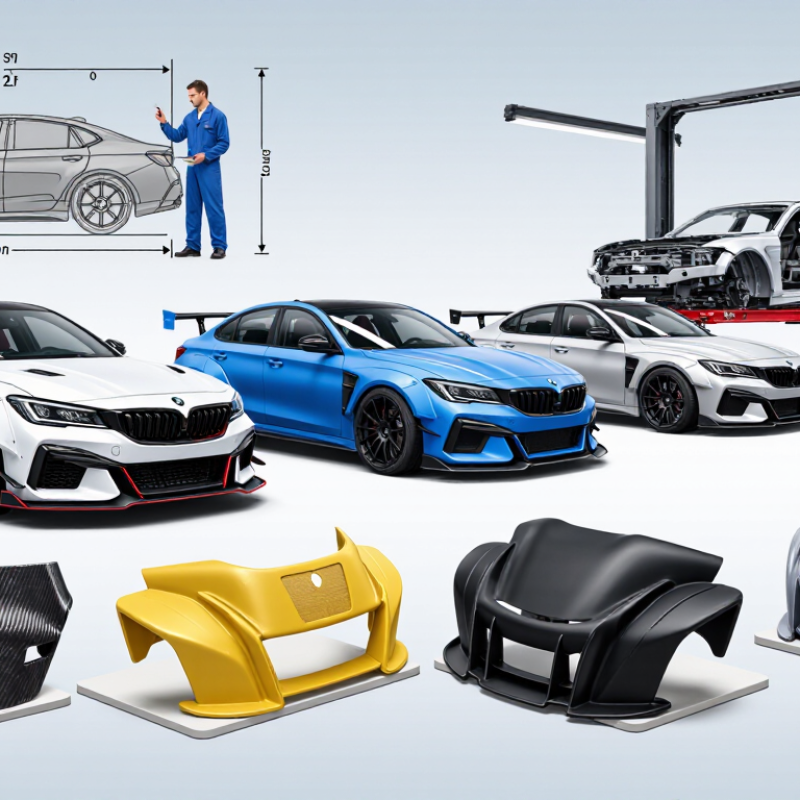
What Do Car Body Kits Do China Top Manufacturers?

What China’s Top Manufacturers Make: Bumpers, Splitters, Sills, and Spoilers

China’s top body-kit manufacturers mainly produce bumpers, splitters, side sills, and spoilers. These parts reshape airflow and change a vehicle’s visual balance. Front bumpers often include parking-sensor mounts and grille openings. Splitters sit lower and require careful ground-clearance checks. Side sills connect the front and rear styling lines. Rear spoilers can reduce lift, but their effect depends on speed and vehicle design.

China Association of Automobile Manufacturers reported more than 31 million vehicle sales in 2024. This large production base supports efficient tooling, plastic molding, CNC trimming, and surface finishing. Many factories use polypropylene or ABS for bumpers and sills. Carbon-fiber or fiberglass options are also available, although their quality can vary. S&P Global Mobility reported that the average US light vehicle age reached 12.6 years in 2024. That aging fleet supports continued demand for replacement and appearance upgrades. Still, a glossy photograph proves very little. Fitment can fail around sensors, headlights, exhaust outlets, or wheel arches.

Tips: Ask for vehicle-specific measurements, material specifications, test photos, and installation instructions. Check bumper flexibility in cold conditions. Confirm spoiler mounting points and fastener sealing. Do not assume lighter means stronger. A small alignment gap can become a costly problem. Manufacturers should also provide clear information about crash-sensor clearance and local road requirements. Their documentation may be incomplete, so buyers should verify details before ordering.

Material Data Compared: ABS 1.04, FRP 1.5–2.0, and Carbon Fiber 1.5–1.6 g/cm³

What Do Car Body Kits Do China Top Manufacturers?

Material density strongly influences a body kit’s handling, fit, and installation effort. Published data from ASTM D792 and ISO 1183 testing commonly places ABS near 1.04 g/cm³. This makes ABS panels relatively light and easy to trim. Engineering databases report FRP at approximately 1.5–2.0 g/cm³. Carbon-fiber composite usually falls near 1.5–1.6 g/cm³, depending on its resin content and fiber layout.

Density alone does not decide finished weight. Panel thickness matters more than many buyers expect. A 2.5-millimeter FRP fender can outweigh a thinner carbon-fiber panel. I have seen this during workshop fitting. Edge sanding created fine dust, while ABS produced cleaner, softer shavings. Carbon fiber felt rigid, but drilling still required careful support around mounting holes.

Small details matter.

Professional manufacturers should verify these figures with batch samples, not catalog claims alone. ISO 1183 procedures measure density under controlled conditions, while real parts may include paint, adhesive, metal brackets, and internal reinforcement. Those additions can change the scale reading significantly.

A carbon-fiber panel may look advanced but still feel heavy if resin-rich. FRP can also vary widely between hand-laid and compression-molded construction. That variability deserves more attention. Material choice should match the vehicle’s mounting points, impact expectations, repair method, and acceptable installation weight.

Aerodynamic Effects Measured by Cd, Cl, and SAE J1263 Testing Methods

What Do Car Body Kits Do China Top Manufacturers?

A body kit changes airflow, not merely appearance. The key measurement is drag coefficient, or Cd. Lower Cd usually means less aerodynamic resistance. The U.S. Department of Energy’s Vehicle Technologies Office reports that aerodynamic drag can consume more than half of highway propulsion energy. A small design error matters at speed.

SAE J1263 coastdown testing measures road-load coefficients on a controlled track. Engineers use repeated runs, calibrated tire pressures, and stable weather conditions. The resulting C-term helps estimate aerodynamic drag and Cd. However, J1263 does not directly prove downforce. Lift coefficient, or Cl, needs pressure mapping, a wind tunnel, or validated computational fluid dynamics. A rear spoiler may reduce rear lift, yet create extra drag. If frontal area remains constant, a 10% Cd reduction cuts drag force by roughly 10% at the same speed. That is useful, but it is not a guaranteed fuel-saving figure.

Tips: Request Cd, Cl, frontal-area, and test-speed data. Ask whether results came from SAE J1263 coastdown testing or a wind tunnel. Compare identical ride heights and wheels. Also inspect underbody panels and wheel-arch treatment. These details often decide the result. A claimed “high-performance” kit without test conditions is incomplete evidence. Real-world traffic, crosswinds, and imperfect installation can change outcomes. The measurement may be right, but the interpretation can still be wrong.

Manufacturing Quality Controls Under ISO 9001:2015 and CNC Tooling Standards

What Do Car Body Kits Do China Top Manufacturers?

Manufacturing Quality Controls Under ISO 9001:2015 and CNC Tooling Standards

Reliable body kits begin with controlled manufacturing, not attractive photographs. ISO Survey 2022 recorded 1,265,216 ISO 9001 certificates worldwide, showing the standard’s broad industrial adoption. However, certification does not automatically prove precise body-panel fit. It confirms that documented quality processes exist and are regularly reviewed.

In practical production, ISO 9001:2015 requires controlled drawings, approved materials, inspection records, and corrective actions. Technicians should measure panel gaps, mounting points, and surface waviness before packaging. A simple digital caliper helps, but complex bumpers often need 3D scanning. Small errors become obvious around headlights and wheel arches. This is where experience matters.

CNC tooling adds another control layer. ISO 230-2 defines methods for checking positioning accuracy and repeatability on machine tools. Tool offsets, spindle temperature, and fixture movement can affect every repeated component. Operators should record these variables during production runs. Not enough.

A strong factory links CNC inspection results with its ISO procedures. It can then trace a defect to a tool, batch, drawing revision, or operator. The process is not perfect. Resin shrinkage and manual finishing still create variation, especially on large fiber-reinforced panels. That weakness deserves honest reporting, not polished claims. Independent pre-shipment inspection and sample fitting can expose problems before installation.

Road-Legal Fitment: UNECE R26, FMVSS 108, and TÜV Certification Requirements

China’s leading body-kit manufacturers must treat road legality as an engineering requirement, not a styling promise. UNECE Regulation No. 26 controls dangerous external projections, including sharp edges, exposed brackets, and poorly integrated extensions. A bumper can look smooth in photographs yet fail a physical inspection. Fitment checks should include door clearance, pedestrian contact zones, fastener security, and the original crash structure.

Lighting creates another common problem. FMVSS 108 requires lamps and reflective devices to maintain approved location, visibility, color, and photometric performance. A wide grille or altered spoiler may block a lamp at specific viewing angles. The National Highway Traffic Safety Administration recorded 40,901 United States road deaths in 2023, according to Traffic Safety Facts, making visibility details difficult to dismiss. Measure beam spread after installation, not only before shipping.

TÜV certification can add valuable independent evidence, but it is not automatically a universal road-approval document. Testing may examine material behavior, mounting strength, edge radius, and installation instructions. Requirements differ between countries and vehicle categories. UNECE’s 2023 road-safety reporting also links safer vehicle design with broader injury prevention goals. In practice, manufacturers should retain drawings, test records, resin specifications, and batch traceability. A certificate without matching production parts is weak evidence. Even experienced suppliers sometimes overlook wheel-travel interference under full steering lock. That mistake deserves another inspection.

Road-Legal Body Kit Fitment: Regulatory Focus by Standard

This chart shows the primary compliance area directly addressed by each reference. A value of 1 means the topic is directly within the standard or assessment scope; it is not a pass/fail score. UNECE R26 focuses on external projections, FMVSS 108 covers lighting and reflective devices, while TÜV assessment generally relies on vehicle-specific technical inspection and supporting documentation rather than one universal body-kit rule.

Sources: UNECE Regulation No. 26, FMVSS No. 108, and TÜV automotive inspection information.

FAQS

What parts do body-kit manufacturers commonly produce?

Common parts include bumpers, splitters, side sills, and rear spoilers. They reshape airflow and visual balance. Fitment varies by vehicle model.

What materials are commonly used for bumpers and side sills?

Polypropylene and ABS are common choices. Carbon-fiber and fiberglass options also exist. Quality can vary between batches, so material claims need verification.

Can a body kit improve aerodynamic performance?

It can change airflow, drag, and vehicle lift. A rear spoiler may reduce rear lift. It may also add drag. The result depends on speed, design, and installation.

What aerodynamic information should buyers request?

Request drag coefficient, lift coefficient, frontal area, and test speed. Ask how the measurements were obtained. A performance claim without test conditions is incomplete evidence.

Why should buyers check ground clearance?

Lower splitters can contact ramps, curbs, or uneven roads. Measure clearance with the vehicle loaded normally. A few centimeters matter.

What fitment problems can occur during installation?

Panels may interfere with parking sensors, headlights, exhaust outlets, or wheel arches. Small alignment gaps can become expensive repairs. Photos cannot prove accurate fitment.

How do quality-controlled factories inspect body-kit parts?

They use controlled drawings, approved materials, inspection records, and corrective actions. Digital calipers measure simple gaps and mounting points. Three-dimensional scanning can check complex bumpers.

Does certification guarantee perfect panel fit?

No. Certification shows documented quality processes, not flawless installation. Resin shrinkage and manual finishing can still create variation. That limitation deserves honest reporting.

What should buyers verify before placing an order?

Request vehicle-specific measurements, material details, test photos, and installation instructions. Confirm mounting points and fastener sealing. Check flexibility in cold conditions. Do not assume lighter means stronger.

Conclusion

What do car body kits do? They reshape a vehicle’s exterior by adding or replacing bumpers, splitters, side sills, and spoilers. These components can improve visual balance and may influence airflow, downforce, and stability when properly designed. China’s top manufacturers typically compare materials such as ABS, with a density of about 1.04 g/cm³, FRP at approximately 1.5–2.0 g/cm³, and carbon fiber around 1.5–1.6 g/cm³. Material selection affects weight, strength, flexibility, finish, and production cost.

Reliable manufacturers evaluate aerodynamic performance through drag coefficient (Cd), lift coefficient (Cl), and SAE J1263 testing methods. They also apply ISO 9001:2015 quality systems, precise CNC tooling, dimensional inspections, and fitment checks to maintain consistent results. For road use, body kits must be designed and installed with relevant requirements in mind, including UNECE R26, FMVSS 108 where applicable, and TÜV certification expectations. Proper documentation and professional installation help ensure that appearance upgrades remain safe, compatible, and compliant with local regulations.

Isabella

Isabella

Isabella is a dedicated marketing professional with a sharp focus on driving brand growth and engagement through strategic content creation. With an extensive background in digital marketing, she combines her passion for storytelling with her keen understanding of industry trends to deliver......