Macajor Auto
Door dings often begin in ordinary places: a crowded supermarket bay, a narrow apartment garage, or a windy parking lot. A neighboring door swings open, and its sharp edge meets your painted door. The mark may look small, but shallow dents and chipped paint can reduce appearance and resale confidence.
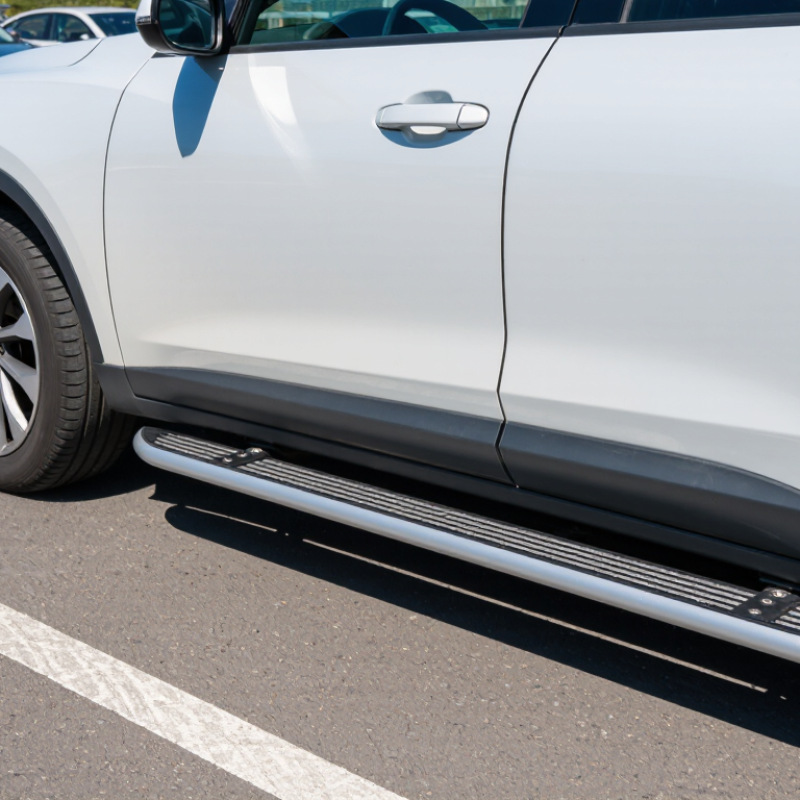
So, do side steps protect cars from door dings? Sometimes, but not automatically. A properly positioned side step can create a physical buffer beside the lower door area. It may receive the impact instead of the rocker panel or door skin. However, vehicle height, step width, mounting position, and the neighboring car’s door shape all matter. A step mounted too low may miss the impact completely. A wide step can also become a target for scratches.
Industry data requires careful interpretation. The SEMA 2023 Market Report describes a multibillion-dollar U.S. specialty-equipment market, showing strong consumer interest in practical vehicle accessories. Yet, the Highway Loss Data Institute does not publish a separate category for door-ding protection claims. That limitation matters. Product popularity is not proof of performance. Independent testing remains uncommon, and many claims rely on design assumptions rather than controlled impact measurements.
Look closely at the details. Inspect the brackets, tubing thickness, mounting points, and clearance from the doors. Stainless steel may resist corrosion, while textured finishes can hide minor scuffs. Still, no side step prevents every dent. Parking farther from crowded spaces may work better. This guide compares side-step designs, real-world protection, installation quality, and trade-offs, helping owners choose evidence over attractive marketing.
Door-ding risk changes with every parking location. I watch neighboring vehicles before choosing a space, especially their door height, parking angle, and distance from the lines. Compact spaces beside large vehicles deserve extra caution. Shopping-center corners often provide more room on one side. End spaces can help, but nearby cart areas may create new risks.
Side steps can add a useful physical buffer along the lower door area. They may take contact before a door reaches painted panels, depending on their width and mounting position. Check their construction, clearance, and attachment points carefully. A weak or poorly fitted step could cause damage instead of preventing it. My own judgment is not always perfect; I have chosen a “safe” space beside a careless parking angle and regretted it.
Tips: Park farther from busy entrances when possible. Leave enough space for neighboring doors to open normally. Avoid spaces beside child-access areas, loading zones, or visibly crowded vehicles. Photograph existing marks before a long parking period. Keep doors closed until you confirm the surrounding clearance. A side step helps, but it cannot protect mirrors, fenders, or upper door edges. Recheck the risk at night, during rain, and when visibility is limited.
Top Side Steps to Protect Cars From Door Dings?
A protective parking space begins with location, not luck. Choose an end space when possible, but avoid tight corners near turning vehicles. Spaces beside columns, curbs, or landscaped islands usually expose only one side of your car. Leave extra room around family vehicles and heavily used shopping areas. Door swings are unpredictable.
The Institute of Transportation Engineers’ Parking Generation Manual identifies parking demand as highly variable by land use and peak hours. That matters. A quiet space at 9 a.m. may become crowded by noon. I check nearby vehicles before parking, especially their door alignment and tire position. A crooked car can reduce your usable clearance quickly.
Keep a visible buffer whenever the layout allows it. NHTSA estimates that backover crashes cause about 210 deaths and 15,000 injuries annually in the United States. Door dings are less serious, but the same distance discipline helps prevent both problems. Park slowly, center the vehicle, and fold mirrors where appropriate. Avoid stopping close to hatchbacks, vans, or vehicles carrying children. Their doors and movement patterns require more space.
I still misjudge sometimes.
A wider space is not always safer if it sits beside a busy cart return. Parking farther from an entrance can reduce traffic, shopping carts, and hurried door openings. Walk a little. Your paint may appreciate it.
Recommended side-clearance targets are practical planning distances rather than universal parking standards. Leaving more space beside your vehicle, avoiding heavily crowded areas, and parking away from large vehicles can reduce the chance of contact from neighboring doors.
Top Side Steps to Protect Cars From Door Dings
Door dings often happen in crowded parking spaces, not during dramatic crashes. The U.S. Bureau of Transportation Statistics recorded about 284.6 million registered vehicles in 2022. More vehicles create tighter parking conditions. Side moldings can absorb light contact along the door’s widest section. Choose flexible, color-matched materials with rounded edges. Poorly fitted strips may trap moisture or collect grit. That can leave marks instead of preventing them.
Door guards protect the door edge, where paint chips appear after careless opening. They work best when installed on clean, dry surfaces. Protective accessories, such as clear films and soft parking pads, add another barrier. S&P Global Mobility reported an average U.S. vehicle age of about 12.6 years in 2024. Older paint may be harder and more expensive to match. Prevention deserves attention. Still, no accessory is foolproof. I would not trust a thick guard to fix weak installation or neglected paint.
Tips: Measure before buying. Keep moldings away from drainage holes. Wash the panel first. Press firmly, but avoid stretching the material. Check the edges after one week. If dirt gathers underneath, remove and reinstall it. A simple test helps: close the door gently and inspect alignment from several angles. The best protection is often boring, careful parking. That is not always realistic.
In crowded parking areas, careful door-opening habits are the simplest defense against door dings. Before touching the handle, check the side mirror and the space beside your vehicle. A shopping cart, bicycle, or nearby car may sit outside your direct view. Pause for three seconds.
Open the door with your inside hand. This small movement turns your shoulders toward the rear, improving your view of the adjacent vehicle. Release the latch gently, then push the door only a few centimeters. Keep one hand on the inner edge. If the gap looks tight, stop and reassess. Never let the door swing freely, even when the wind seems calm.
When parking, leave extra room beside the driver’s side whenever possible. In a narrow space, enter slowly and park near the center of your marked area. Ask passengers to wait until you have checked the surroundings. Children may pull a handle quickly, so explain the rule before anyone exits. Use the far-side door only when it is clearly safer.
I still catch myself opening a door too quickly after a long day. That mistake is easy to repeat. A gentle pause protects both paintwork and neighboring vehicles. If contact happens, inspect the edges immediately for chips, sharp bends, or loose trim. Record the damage honestly and handle the matter calmly.
A small door ding can look harmless beside a busy parking lot. I have seen neglected dents collect dirt along broken paint edges. Moisture then reaches exposed metal and creates rust. Inspect the damage in bright, angled light. Clean the panel first. Check for chipped paint, sharp creases, and loose trim. Open and close the door gently. Resistance or unusual noise may indicate hidden alignment damage. Measure the dent with a ruler and photograph it from several angles. This record helps a repair professional judge whether the panel needs paintless dent repair or refinishing.
Tips: Do not press the dent with a household tool. That can stretch the metal or damage the inner brace. Cover a sharp edge with temporary protective tape, without trapping dirt underneath. Arrange an inspection promptly, especially after rain or temperature changes. A qualified technician should assess paint thickness, metal tension, and access behind the panel. Ask for a written repair plan and photographs of similar work. I once underestimated a shallow crease because it appeared only under sunset light. Better lighting would have changed my first opinion.
Repair timing matters more than dent size alone. A clean, shallow ding may be corrected quickly when the paint remains sound. Cracked paint requires careful preparation and corrosion control. A door that closes unevenly needs attention beyond cosmetic repair. After fixing the damage, park with extra space whenever possible. Leave room. Small habits reduce repeat damage.
| Inspection Area | What to Check | Possible Risk if Ignored | Priority | Recommended Action | Typical Time and Cost Range |
|---|---|---|---|---|---|
| Paint surface | Look for paint cracks, chips, exposed metal, or a rough edge around the dent. | Moisture can reach the metal and contribute to corrosion, especially where paint is missing. | High | Clean and dry the area. Apply suitable touch-up protection to small chips, then arrange a professional repair if bare metal is visible. | Inspection: 5–10 minutes. Minor touch-up: approximately $15–$50 in materials. |
| Door operation | Open and close the door slowly. Check for rubbing, resistance, unusual noises, or uneven gaps. | A displaced panel, hinge, latch, or door seal may affect safe closing and weather protection. | High | Do not force the door. Limit use until the alignment, hinges, latch, and seals have been inspected. | Inspection: 5–15 minutes. Adjustment or repair cost varies by damage severity. |
| Door gaps and alignment | Compare the gap around the affected door with the opposite side of the vehicle. | Uneven gaps can indicate movement beyond a simple cosmetic dent. | High | Photograph the gap and have a qualified repairer assess the door before attempting dent removal. | Inspection: 10–20 minutes. Professional assessment is often needed. |
| Small shallow dent | Check whether the dent is shallow, smooth, and away from the door edge, handle, and body crease. | Improper pulling or heating can stretch the metal, damage paint, or make the dent more noticeable. | Medium | Consider paintless dent repair when the paint is intact and the panel can be accessed without removing critical components. | Typical repair time: 1–3 hours. Common range: approximately $100–$300. |
| Sharp crease or body-line damage | Identify a sharp fold, dent crossing a styling line, or distortion near the edge of the panel. | Metal may be stretched or hardened, making a simple repair less suitable. | High | Obtain a body repair assessment. Avoid suction cups, glue pulling, or hammering without the correct tools and training. | Repair time: commonly 1–3 days. Cost depends on paint and panel damage. |
| Door edge and latch area | Inspect the vertical edge, latch zone, and contact points for chipped paint or fresh impact marks. | Damage can interfere with latching, sealing, or the alignment of adjacent panels. | High | Keep the door securely closed when parked and arrange prompt inspection if the latch does not engage normally. | Inspection: 5–10 minutes. Repair cost depends on whether alignment or latch parts are affected. |
| Clear coat and surface transfer | Check whether the mark is another object’s paint or surface residue rather than a deep scratch. | Abrasive rubbing can remove clear coat and enlarge the damaged area. | Low | Wash first, then use a clean microfiber cloth and a mild automotive surface cleaner. Stop if the mark does not lift easily. | Cleaning time: 10–20 minutes. Materials: approximately $5–$25. |
| Rust or bubbling paint | Look for orange discoloration, bubbling, flaking, or swelling around the ding. | Corrosion can spread beneath the surrounding paint and require more extensive preparation. | High | Do not seal dirt or moisture under temporary tape. Keep the area dry and schedule sanding, corrosion treatment, and refinishing. | Inspection: 5–10 minutes. Repair may take 1–3 days depending on corrosion spread. |
| Weather seal and window operation | Check for gaps in the rubber seal, water entry, wind noise, or a window that moves abnormally. | Water intrusion can damage trim, insulation, wiring, and interior materials. | High | Keep the interior dry and have the seal, glass run, regulator, and door alignment inspected. | Inspection: 10–20 minutes. Repair time and cost depend on the affected component. |
| Temporary protection after inspection | Confirm that the surface is clean, dry, and free of loose paint before applying temporary protection. | Improper tape or trapped moisture may pull paint away or promote corrosion. | Medium | Use clean, removable automotive-safe protection only for short-term coverage. Remove it carefully and avoid covering wet or rusty areas. | Application time: 5–10 minutes. Materials: approximately $5–$20. |
| Prevention in parking areas | Assess neighboring vehicle spacing, shopping-cart areas, tight spaces, and locations with frequent door contact. | Repeated impacts can create multiple dents and scratches before they are noticed. | Low | Choose end spaces or wider spaces when practical, park away from cart-return areas, and leave enough clearance around both doors. | Time: a few extra minutes per parking stop. Cost: no direct cost. |
Choose an end space when possible. Avoid tight corners near turning vehicles or busy cart areas. Leave extra room beside family vehicles and crowded spaces.
Check their door height, parking angle, and distance from the lines. A crooked vehicle can quickly reduce your usable clearance. Door swings are unpredictable.
Side steps can form a physical buffer along the lower door area. Their protection depends on width, clearance, and mounting position. They cannot protect mirrors, fenders, or upper door edges.
Inspect the construction and attachment points carefully. A weak or poorly fitted step may cause damage instead. Confirm it does not interfere with doors or nearby obstacles.
Usually, yes. Distant spaces often reduce hurried door openings, shopping carts, and heavy foot traffic. Walk a little. Your paint may appreciate it.
Leave extra space around family vehicles, vans, and hatchbacks. Avoid child-access areas when possible. Their doors and movement patterns may require more room.
Clean the panel and inspect it in bright, angled light. Look for chipped paint, sharp creases, loose trim, or exposed metal. Photograph the damage from several angles.
Avoid pressing the dent with household tools. You could stretch the metal or damage an inner brace. Ask a qualified technician to assess the panel and provide a written repair plan.
Arrange an inspection when paint is cracked, metal is exposed, or the door closes unevenly. Moisture can reach exposed metal and encourage rust. I once underestimated a shallow crease. Better lighting changed my opinion.
Yes. Limited visibility can hide tight clearance, existing marks, and awkward parking angles. Recheck the surrounding space before opening your door. Slow decisions help.
Protecting your car from door dings starts with understanding the risks in your everyday parking locations. Busy shopping centers, narrow garages, and crowded street spaces require extra attention. Whenever possible, choose end spaces, park farther from vehicle clusters, and leave enough room between cars to reduce the chance of neighboring doors making contact. Developing a habit of checking your surroundings before parking can also prevent many avoidable dents.
For added protection, consider practical accessories such as side moldings, door guards, and removable protective strips. But do side steps protect cars from door dings? They may offer limited protection in specific situations, depending on their position and design, but they should not replace careful parking and door-opening habits. Open doors slowly in crowded areas, inspect existing marks regularly, and address minor dings promptly. Early repairs can help prevent paint damage, corrosion, and more costly restoration later.
