Macajor Auto
Aluminum running boards collect road film, dust, salt, and muddy splashes. Their textured surfaces can hide grime in grooves, while polished or coated finishes may show scratches quickly. Knowing how to clean aluminum running boards starts with identifying the finish and checking the vehicle manufacturer’s care guidance. A gentle method is usually safer than strong chemicals or rough scrubbing. Start gently. Rinse away loose grit first, so dirt does not drag across the metal.
Use clean water, a mild automotive soap, and a soft-bristled brush or microfiber cloth. Work in small sections, following the board’s texture, then rinse thoroughly. Pay attention to the edges and the area beneath the step, where residue often remains. Dry the surface with a soft towel to reduce water spots. Small details matter. If stains persist, choose a cleaner labeled safe for the specific aluminum finish and test it on a discreet spot. Avoid steel wool, abrasive pads, and unverified acidic or alkaline products; they may dull the finish or damage protective coatings. It is tempting to scrub harder when a mark stays put, but that can make the surface look worse. Results also vary with age, finish, and exposure, so one cleaning may not restore a weathered board completely. A steady routine helps keep running boards cleaner and makes future buildup easier to remove.
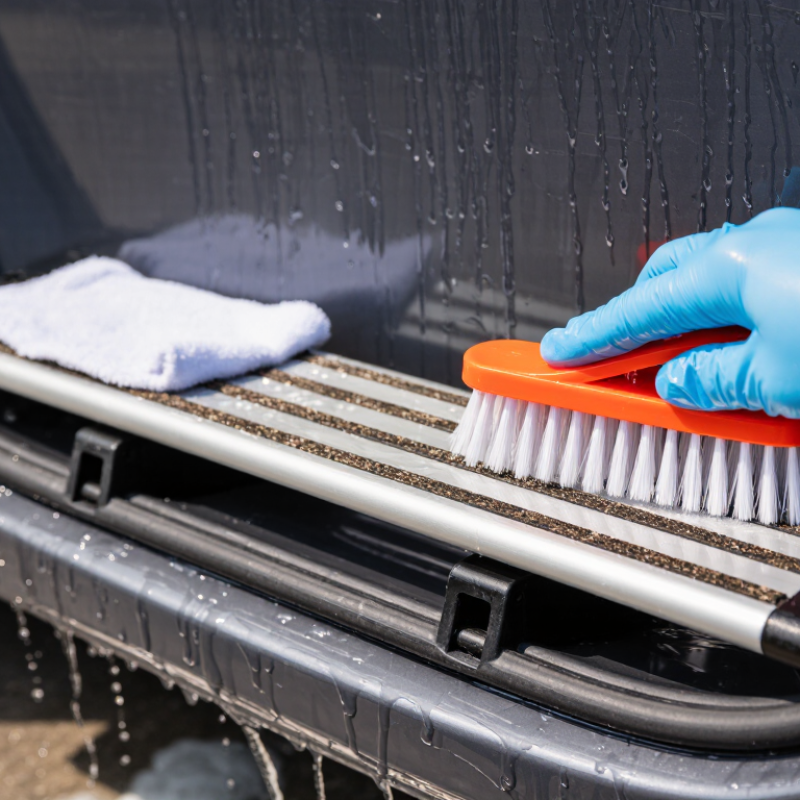
Identify the Aluminum Finish and Assess the Dirt
Before cleaning, check whether the running board is bare, anodized, painted, or powder-coated aluminum. Look along an exposed edge and beneath the board, where the finish may be easier to distinguish. Bare aluminum often looks matte; coated surfaces usually appear more even. But appearance alone can mislead. A dull patch may be oxidation, dried road film, or simply a worn coating.
Check the dirt, too. Grit caught in tread grooves can scratch a finish when rubbed, while oily film may need a different cleaner than loose dust. Start with a cool surface, rinse away grit, then test a mild soap solution in a hidden spot. Keep the cloth soft. ASTM B244 describes eddy-current measurement of anodic and other nonconductive coatings on aluminum; ASTM D7091 covers dry-film coating thickness measurement on nonferrous metals. These standards show why a coating’s condition matters, though they are inspection methods, not cleaning instructions. Visual checks are imperfect. If the finish is chipped or chalky, avoid abrasive pads and strong chemicals until you know what coating remains. A small test area can save a much larger repair.
Start with water and a soft cloth, then use pH-neutral soap for ordinary dirt. Check whether the surface is polished, anodized, or coated before choosing a cleaner; test it on a small, inconspicuous area. The risk scores are a qualitative guide, not laboratory measurements. Avoid abrasive pads and harsh acidic or alkaline cleaners, which can scratch or damage aluminum and its finish.
Gather nonabrasive tools before you start. A bucket, garden hose, microfiber cloths, and a soft nylon brush are usually enough. Choose a mild car-wash soap or a cleaner labeled safe for aluminum. Running boards may have a clear coating, so check the care instructions before using stronger products. Avoid steel wool, gritty powders, and stiff wire brushes; they can leave scratches that trap grime.
Rinse off loose sand first. It can act like sandpaper when rubbed across the surface. Mix soap with water as directed, then wash small sections with a damp cloth. Use the soft brush gently around grooves and mounting edges. Rinse each section before the cleaner dries, and dry the boards with a clean microfiber towel to reduce water spots. If you are unsure how a product will react, test it on a hidden area. I have found that extra scrubbing often does more harm than good.
Tips: Wear gloves, and keep cleaner off nearby painted surfaces when possible. Skip acidic or highly alkaline products unless the label specifically confirms aluminum compatibility. A small patch test is worth the time. Don’t rush it.
Start with cool running boards. Heat can make rinse water evaporate quickly, leaving mineral spots behind. Park on level ground and use a steady stream of clean water to loosen dust, sand, and dried road spray. Work from the outer edge toward the vehicle, guiding debris down and away from the door seals. Keep the nozzle several inches from the aluminum. A garden hose is usually enough; a forceful jet held too close can push grime into seams or damage nearby trim. No need to rush.
Textured steps and narrow grooves often hold grit. Let water run over them for a few seconds before touching the surface. That small pause helps prevent trapped particles from scratching the finish during later cleaning. Rinse the underside and the ends of the boards, where muddy splashback tends to collect. One missed corner matters. Check the water as it drains; if it still looks brown or carries visible grit, rinse again. I may be cautious here, but brushing too early can turn loose dirt into an abrasive paste. Once the runoff looks clear, the boards are ready for a gentle wash.
Rinse the running boards with clean water before scrubbing. This removes grit that could scratch the aluminum finish. Mix a small amount of mild dish soap into warm water, then wash with a soft microfiber cloth or nylon brush. Work along the board’s grooves, where road dust and oily film collect. Rinse often. Dry with a clean towel to limit water spots, especially around bolts and seams.
For a stubborn mark, hold a damp, soapy cloth against it for a few minutes, then rub gently. Avoid steel wool, harsh scouring pads, and strong acidic or alkaline cleaners; they can scratch or discolor the surface. Test any cleaner on a hidden spot first. Mineral deposits may need repeated gentle cleaning rather than harder pressure. The USGS classifies water with 121–180 milligrams per liter of calcium carbonate as hard, a useful clue when pale rings return after washing (USGS Water Science School, “Hardness of Water”). If your rinse water falls in that range, dry the boards promptly. A missed patch near the edge is easy to overlook. Check it in daylight.
After cleaning, rinse away every trace of soap, then dry the running boards with a clean microfiber towel. Pay attention to the edges, bolt heads, and the narrow gap beneath each board; trapped water can leave pale spots as it evaporates. A second dry towel helps. Let the surface air-dry in the shade before applying protection. Patience matters. I have learned that wiping a board while it is still warm can spread water marks instead of removing them.
Choose protection that matches the finish. For polished or bare aluminum, use a product labeled safe for aluminum, and test it first on a small hidden area. Brushed or coated surfaces may need a gentler, finish-compatible sealant; abrasive polish can dull their appearance. Apply a thin layer with a soft cloth, following the product directions, then buff off residue. Keep waxes and slick protectants away from textured step pads. Grip matters more than shine. If the surface still feels slippery after treatment, clean that area again and leave it uncoated. It is easy to overapply, especially around seams, so use less than you think and check the result in daylight.
| Step | What to Do | Recommended Method | Finish-Specific Guidance | Avoid |
|---|---|---|---|---|
| 1. Rinse off loose debris | Remove grit, mud, and road salt before wiping. | Rinse with clean water, working from the top downward. Use a gentle flow rather than directing high-pressure water at seams or electrical components. | Suitable for bare, polished, anodized, clear-coated, and powder-coated aluminum. | Do not dry-wipe gritty surfaces; abrasive dirt can scratch the finish. |
| 2. Wash gently | Lift away everyday grime and traffic film. | Use a pH-neutral vehicle wash diluted according to its label and a soft microfiber mitt or sponge. Clean textured areas with a soft brush. | A mild wash is a good starting point for all finishes. Test any cleaner on a small, inconspicuous area first. | Avoid strong acids, caustic cleaners, steel wool, and abrasive scouring pads. |
| 3. Rinse thoroughly | Prevent cleaner residue and loosened dirt from drying on the surface. | Rinse the full board, including tread grooves, edges, and accessible joints. | Pay extra attention to seams and crevices where salt and soap can collect. | Do not leave detergent residue beneath trim or in textured channels. |
| 4. Dry the surface | Reduce water spots and standing moisture. | Blot and wipe with a clean, soft microfiber towel. Dry grooves and reachable seams, then allow remaining moisture to air-dry. | Drying is useful for every finish, especially after washing in direct sun or in areas with hard water. | Avoid rough towels and aggressive rubbing, which may mar polished or coated surfaces. |
| 5. Apply suitable protection | Protect the clean, dry finish with a compatible product. | Apply a thin layer of the product recommended for the surface, following its label. Buff off residue if directed. | Use aluminum polish only on suitable bare or polished aluminum. For clear-coated, anodized, or powder-coated boards, choose a product labeled safe for that coating. | Do not use abrasive metal polish on coated or anodized finishes; it can dull or remove the surface layer. |
| 6. Check traction areas | Keep the step surface safe to use. | Wipe away any excess product and confirm that tread pads and textured sections are clean and dry. | Apply protectant only where its label permits; keep slick products off walking surfaces. | Do not leave wax, polish, or dressing on areas used for footing. |
Tip: Clean regularly, and rinse promptly after exposure to road salt. Always follow the running board and cleaning-product care instructions.
Check an exposed edge or the underside. Bare aluminum often looks matte, while coated surfaces look more even. Appearance can mislead.
Start with a cool surface and rinse away loose grit. Grit can scratch the finish when rubbed. Rinse first.
Mix a little mild dish soap with warm water. Use a soft microfiber cloth or nylon brush, then rinse well.
Move the cloth or brush along the grooves, where dust and oily film collect. Rinse the tool often. Small pockets are easy to miss.
Hold a damp, soapy cloth against the mark for a few minutes. Rub gently and repeat if needed. More pressure is not always better.
Avoid steel wool, harsh scouring pads, and strong acidic or alkaline cleaners. They may scratch or discolor the surface.
Hard water can leave mineral deposits as it dries. Dry the boards promptly with a clean towel, especially near bolts and seams.
Skip abrasive pads and strong cleaners until you know what coating remains. Test a mild cleaner in a hidden spot; visual checks are imperfect.
Look along the edges and grooves in daylight. A quick glance may not catch every patch.
Knowing how to clean aluminum running boards starts with identifying their finish and checking what kind of dirt or staining has built up. A polished surface may need gentler care than a textured or coated one, so choose soft cloths or brushes and a mild, nonabrasive cleaner suited to the finish. Avoid harsh scrubbing that could scratch or dull the aluminum.
Begin by rinsing away loose grit and road debris, which helps prevent particles from rubbing against the surface during washing. Clean the boards with gentle strokes, giving stubborn stains a little extra time with an appropriate cleaner rather than using excessive force. Rinse thoroughly to remove residue, then dry the boards with a clean, soft towel to help prevent water spots. If desired, apply a protective product that is compatible with the finish, following its directions to maintain the boards’ appearance.
