Macajor Auto
Choosing a body kit from China can give your car a sharper profile, but the right choice starts with fitment, materials, and clear specifications. A low front lip may look striking in a product photo. On a steep driveway, it can scrape before the car reaches the street. That small detail matters.
To understand how to choose the right body kit for your car, begin with your exact make, model, year, and trim. Compare the kit’s listed measurements with your vehicle, then ask the supplier how fitment was checked. Request close-up photos of mounting points, panel edges, and the underside. Fiberglass, polyurethane, and ABS each behave differently during installation and daily use. None is automatically best for every driver. A reputable seller should explain the material, included hardware, finish, packaging, and expected adjustments in plain language.
As automotive engineer and educator Jason Fenske often emphasizes through his engineering-focused work, modifications should be judged by function as well as appearance. A useful fitment principle is: “Choose the kit for the roads and use your car actually sees.” Treat that as a practical guide, not a verified quotation. Ask for written answers about shipping protection, replacement parts, and return conditions before paying. Check recent buyer photos, not only polished studio images. They may show uneven gaps or extra sanding that product pages omit. I’d still verify every measurement twice; specifications can be incomplete, and supplier replies can be vague. A little caution is worth it. This guide will help you compare options, assess quality, and choose a kit that suits both your car and your real driving conditions.
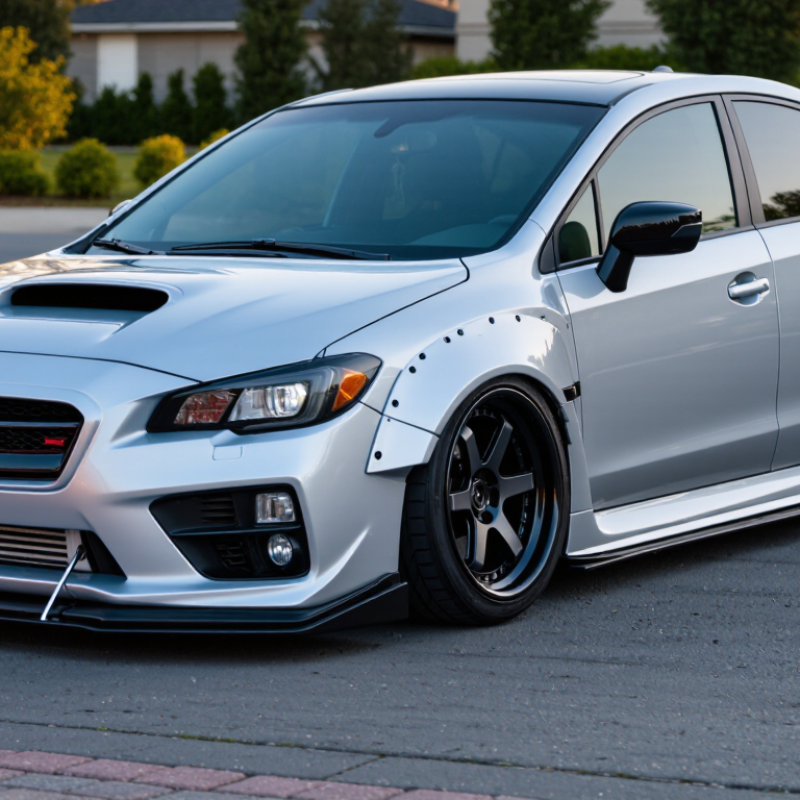
A body kit can look correct in a listing and still fail to fit your car. Match the kit to the exact year, make, model, and trim—not just the model name. Midyear updates can change bumper shapes, grille openings, or mounting points. Small differences matter. Check whether your car has parking sensors, fog lights, a standard or sport bumper, and any factory appearance package. A kit made for the wrong bumper may leave gaps around the wheel arches or block sensor openings.
Before ordering from China, send the seller clear photos of your front, rear, and side bumpers, plus the vehicle’s exact details. Ask for written confirmation of fitment and compare product photos with your car, including cutouts and attachment points. Measure twice. Also confirm the kit’s material, included brackets, and whether it arrives primed or ready for paint. A careful check can still miss a small bracket difference; that possibility is worth discussing before payment. Keep the fitment conversation and product details in writing, and review shipping and return terms in case the parts do not match the listing.
PP and ABS differ in density, flexibility, and how they handle impacts. Typical PP is about 0.90 g/cm³, while ABS is around 1.04 g/cm³. For equal-volume parts, PP may weigh roughly 13 percent less.
That matters. A lighter bumper or side skirt can reduce added weight, but density alone does not predict the finished part’s weight. Thickness, ribs, mounting brackets, and design all count. Ask the supplier for the component’s actual weight, not just the material specification.
PP can flex during minor knocks, which may suit parts exposed to parking bumps. ABS is often stiffer and offers good impact resistance, but performance varies by grade, temperature, and part design. Not always. Cold conditions can change how plastics respond, so ask for test results and the temperatures used. Request close-up photos of mounting points and edges, plus a sample if practical. Check panel thickness and fitment details against your vehicle before ordering. It is tempting to choose PP simply because it is lighter, but that shortcut ignores where and how the kit will be used. A careful comparison of weight, impact needs, and construction gives a more dependable basis for choosing.
For a U.S.-bound passenger car, don’t treat a body kit as a styling-only purchase. FMVSS No. 581 sets damage limits for specified bumper-system components after prescribed low-speed impacts. Its test procedures include 2.5-mph front and rear impacts. The result depends on the tested vehicle and setup, not just the kit material. That distinction matters.
A new fascia can change how the bumper absorbs or transfers impact energy. It may also cover fasteners or interfere with the original reinforcement. Ask the supplier for fitment drawings, material details, mounting instructions, and any test evidence for your exact vehicle configuration. A broad “FMVSS compliant” claim is not enough by itself. Fit matters.
Before ordering, compare the kit’s mounting points with the car’s original bumper structure. Have a qualified collision professional inspect any proposed changes to the reinforcement, absorber, or attachment hardware. Keep the product documents and installation records. A neat fit is useful, but it does not prove impact performance. I would verify the details before paying; small gaps in the paperwork can be easy to overlook.
When choosing a body kit from China, ask for the supplier’s ISO 9001:2015 certificate and check its scope, site, expiry date, and issuing body. ISO’s ISO Survey 2022 recorded 1,265,216 ISO 9001 certificates across 189 countries. That shows wide adoption, not that a particular kit fits your car or meets your finish requirements. ISO 9001 assesses a quality management system; it is not product approval.
Ask for pre-shipment inspection records tied to your order number and exact part numbers. Strong records show inspection dates, sample sizes, acceptance criteria, measurements, photographs, and any corrective actions. For a molded bumper or side skirt, look for close-up images of mounting tabs, edges, surface bubbles, and finish. Request measurements against the approved drawing. A simple “passed” stamp is weak evidence. That matters.
Check that the report identifies who inspected the goods and whether the inspected sample came from your production lot. Compare its photos with the parts being packed, then request clear packing photos before dispatch. Inspection is usually based on sampling, so defects can still slip through. I would treat a clean report as useful evidence, not a guarantee. For a first order, agree in writing on defect limits and what happens if the inspection finds a mismatch. That step is easy to overlook.
| Evaluation Dimension | What to Verify | Useful Evidence | Practical Buyer Check | Decision Guidance |
|---|---|---|---|---|
| Vehicle fitment | Confirm the exact make, model, model year, body style, trim, and original-equipment configuration the kit is designed for. | Dimensioned drawings, fitment list, installation instructions, and photographs of a trial installation on the stated vehicle. | Ask the supplier to identify any differences between trims, facelift versions, parking sensors, exhaust layouts, or factory body parts. | Proceed only when fitment details are specific and documented; a model name alone may not distinguish different versions. |
| Material and construction | Identify the material for each component. Common body-kit materials include ABS, polypropylene (PP), and fiberglass-reinforced plastic (FRP); properties vary by formulation and construction. | Product specification, material declaration, component labels, and—where needed—independent test reports for agreed properties. | Confirm which parts use each material and whether the quoted product is supplied raw, primed, painted, or with mounting hardware. | Choose material and finish based on the vehicle, intended use, repair preferences, and supplier’s documented specification. |
| ISO 9001:2015 certification | Check that the certificate is current and that its stated scope and site are relevant to the supplier and the work being purchased. | A copy of the certificate with certification body, certificate number, scope, covered site, and validity information. | Verify the certificate with the issuing certification body or an appropriate accreditation directory where available. | Certification indicates a quality-management system within its stated scope; it does not by itself certify a particular body kit or guarantee its fit or finish. |
| Quality controls | Understand how incoming materials, production steps, finished components, and nonconforming products are controlled. | Relevant inspection procedures, sample records, corrective-action examples, and production traceability information. | Ask how defects are recorded, who approves rework, and how the production lot can be linked to inspection records. | Prefer controls that are documented and traceable to the order and product specification. |
| Dimensions and fit tolerances | Agree the critical dimensions, measurement points, reference vehicle or fixture, and acceptable tolerances before production. | Approved drawings or 3D data, a signed specification, and recorded measurement results for agreed critical points. | Request measurements against the approved drawing rather than relying only on general claims such as “perfect fit.” | Tolerances should be agreed for the specific part and installation method; there is no single universal tolerance for every body kit. |
| Surface finish and appearance | Specify the required finish, color reference if applicable, surface condition, and acceptable limits for visible defects. | Approved reference sample, finish specification, inspection checklist, and dated photographs of production samples. | State how the part will be inspected and viewed, including lighting and viewing distance, before approving cosmetic criteria. | Define appearance requirements in writing, especially when parts will be painted or installed as visible exterior components. |
| Pre-shipment inspection (PSI) | Arrange inspection after production is complete and before dispatch, with the inspection scope agreed in advance. | Dated inspection report identifying the order or lot, inspected quantity, checks performed, findings, and clear photographs. | Include quantity, workmanship, dimensions, finish, accessories, packaging, and shipping marks as applicable to the order. | A PSI report is useful evidence of the inspected goods at that time; it is not a guarantee against every later transport or installation issue. |
| Sampling and acceptance criteria | Agree whether inspection is based on a sample or on every unit, and define how defects are classified and accepted. | Written inspection plan; if sampling is used, the agreed sampling standard and plan, such as a specified plan under ISO 2859-1. | Record the lot size, sample size, defect categories, and acceptance numbers in the purchase or inspection instructions. | Sampling results depend on the selected plan and criteria; do not assume that a named standard sets one universal sample size or acceptance level. |
| Packaging and shipping protection | Check that packaging protects the parts from abrasion, impact, deformation, moisture, and movement during handling and transit. | Packaging specification, photographs of packed goods, carton or pallet details, and shipping marks approved for the order. | Confirm how fragile edges and painted surfaces are protected and whether the packing method suits the planned transport route. | Approve packaging as part of the order; inspection of the product alone does not establish that transit protection is adequate. |
| Order documents and traceability | Ensure product description, quantity, specifications, inspection results, and shipping documents refer to the same order and goods. | Purchase specification, packing list, commercial invoice, inspection report, and any agreed material or test documents. | Check that part numbers, quantities, revision levels, and package marks are consistent across relevant records. | Consistent records make it easier to resolve discrepancies and link delivered parts to the approved specification. |
| Commercial terms and remedy | Agree lead time, payment milestones, responsibility for freight and import charges, and the process for handling shortages or defects. | Written quotation, purchase order, agreed delivery terms, warranty terms, and a documented claims procedure. | Define the evidence and notification period required for a claim, and agree whether remedy means replacement, repair, or another solution. | Clear written terms reduce uncertainty; confirm that the final purchase documents match the agreed specification and inspection plan. |
| Buyer note: Set product specifications, inspection scope, and acceptance criteria in writing before production. Verify certificates and records independently where practical, and treat supplier documentation as evidence to review—not as a substitute for agreed requirements. | ||||
A body kit’s quoted price is only the starting point. Ask the supplier for each carton’s outer dimensions, gross weight, and packing list. Multiply length, width, and height in metres to estimate cubic metres; add the cartons together. Long bumpers and side skirts can consume freight space even when they are light. Carriers may bill by dimensional weight or actual weight, whichever is higher, so confirm the forwarder’s rating method before comparing quotes.
Build a landed-cost sheet with product cost, pickup, export handling, freight, insurance, import duties, and local delivery. Duty rates depend on the product’s correct classification, origin, and destination; confirm them with a customs broker rather than relying on a supplier’s estimate. Incoterms® 2020 clarify who arranges transport, clearance, and costs: under DAP, the buyer generally handles import clearance and duties; under DDP, the seller takes on those responsibilities. Read the named destination and agreed terms closely. UNCTAD’s Review of Maritime Transport 2024 reported that container freight rates more than doubled from late 2023 to mid-2024, showing why an old quote can mislead. Not perfect. Leave a contingency for storage, inspection, or remeasurement. That estimate can miss. Compare quotes using the same carton data, route, delivery point, and Incoterm—not just the headline freight price.
Match the exact year, make, model, and trim. Check bumper style, sensor openings, fog lights, and factory appearance options. Small gaps matter.
Send clear front, rear, and side photos, plus your vehicle details. Ask for written fitment confirmation and compare cutouts and mounting points. Measure twice.
PP has a typical density near 0.90 g/cm³; ABS is about 1.04 g/cm³. Equal-volume PP parts may weigh less, but thickness and brackets affect actual weight.
PP can flex during minor knocks, while ABS is often stiffer. Results depend on design, temperature, and material grade. Not always.
Ask for component weights, panel thickness, bracket details, and close-up photos of edges and mounts. Test results can help, though one test may not reflect your conditions.
Multiply each carton’s length, width, and height in metres. Add the carton volumes together. Long bumpers can take up surprising space.
Include the kit, pickup, export handling, freight, insurance, import duties, and local delivery. Also allow for storage or inspection. That adds up.
Carriers may charge by actual weight or dimensional weight, depending on their method. Confirm the rating method and use the same route and carton details when comparing quotes. An estimate can still miss something.
Choosing the right body kit starts with fitment. Confirm your car’s exact year, make, model, trim, and bumper configuration before comparing designs or requesting a quote. Then weigh material against your driving needs: polypropylene (PP), at about 0.90 g/cm³, is lighter, while ABS, at about 1.04 g/cm³, may better suit buyers who prioritize impact resistance. If the car is intended for the U.S. market, check whether the bumper setup aligns with the relevant 2.5-mph impact criteria under FMVSS 581.
To understand how to choose the right body kit for your car from China, also assess the supplier’s quality controls. Ask for evidence of ISO 9001:2015 certification and recent pre-shipment inspection records, including fitment and finish checks. Finally, estimate the full landed cost rather than comparing product prices alone: include carton volume, freight, duties, and the agreed Incoterms. These steps help you compare options clearly, reduce surprises, and choose a kit that fits both your vehicle and your budget.
